What Is Going On
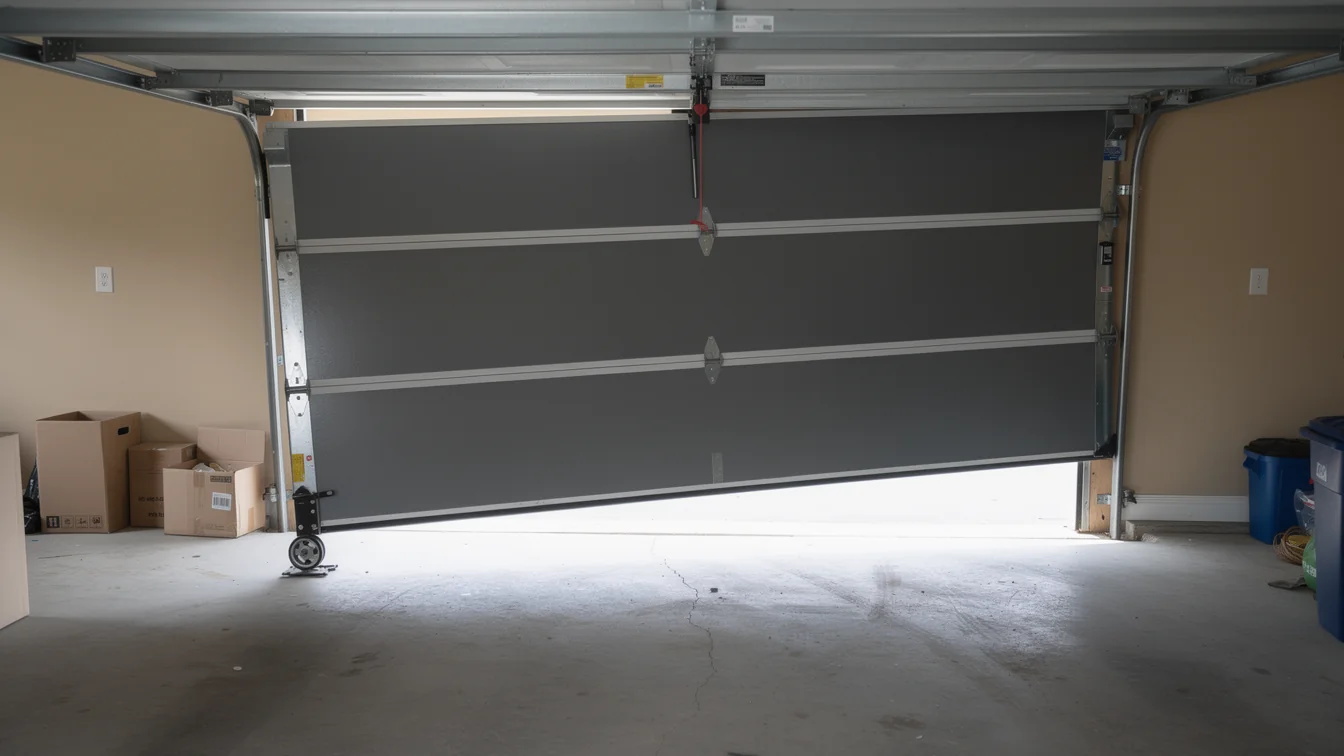
Every sound a garage door makes is a symptom, not the problem itself. Most houses in this service area went up between 1976 and 2012, with the bulk of the stock dating to the 1980s and 90s. That matters because the hardware installed during those decades is now 25 to 45 years old, and a lot of it is original. A door that grinds on the way up is usually telling you the rollers have worn flat and are riding metal-on-metal in the track instead of rolling smoothly through it. A loud bang partway through the cycle is often a torsion spring losing tension unevenly, not snapping outright yet. A rhythmic clunk every few feet, synced with the door's travel, points to a bent or dented track panel rather than the opener itself.
The noise tells you where to look before you call anyone. A squeal that only shows up in the morning and fades by afternoon is different from a grind that's there every time - one is stiff metal warming up, the other is wear that isn't going away on its own. Don't assume the opener is the culprit just because it's the loudest part of the system. The opener usually amplifies a problem that started somewhere else on the door.
What to Look At First
Start at the rollers. On a door installed any time in the 1980s or 90s window that makes up most of this area's stock, factory rollers were often plain steel with no sealed bearing, and after three decades they groove, flat-spot, and start grinding. Pop one out (door down, opener unplugged) and roll it on a flat surface - if it doesn't spin freely and quietly, that's your noise.
Next check the track bolts and brackets. Houses from this era tend to have track mounted straight to wood framing rather than steel jamb reinforcement, and over the years those lag bolts work loose from the thousands of open-close cycles, which turns a tight track into a rattling one. Tighten what's loose, but don't force a bent bracket back into line - that usually cracks it.
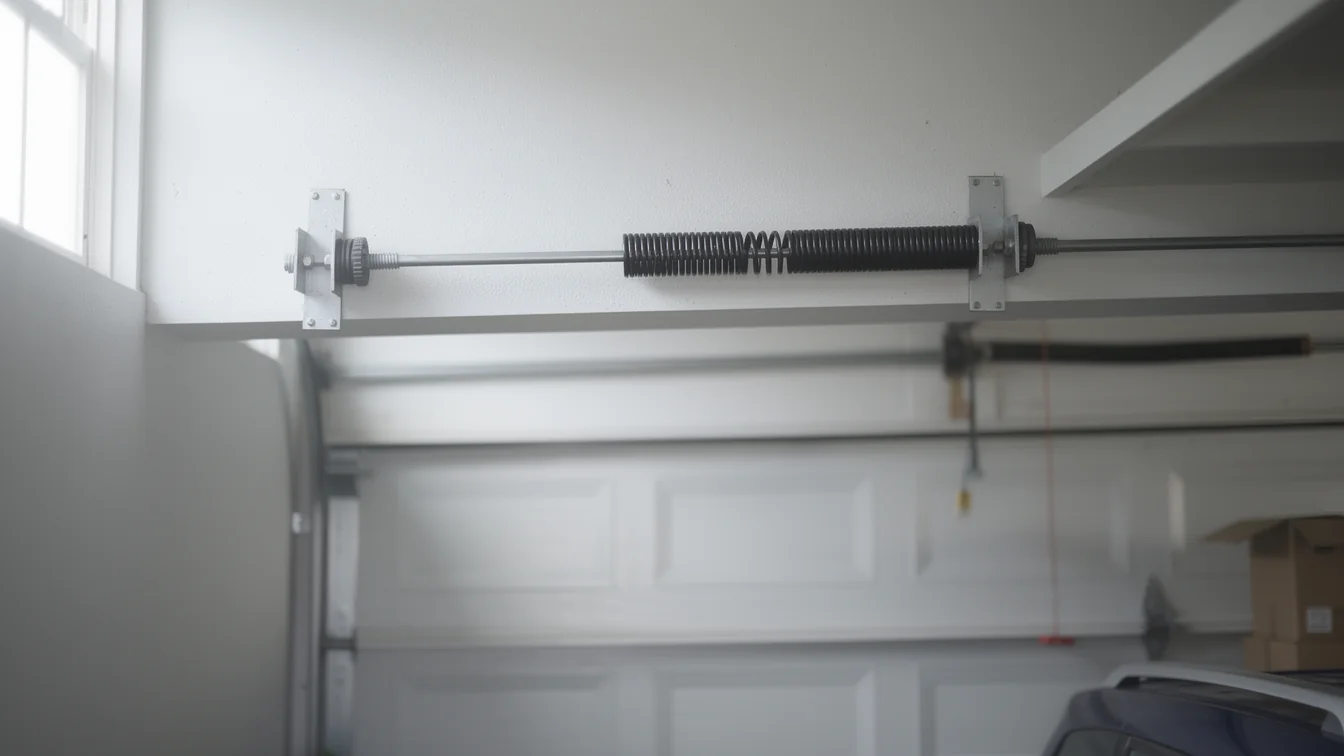
Last, listen to the spring cycle itself. A door built in that mid-80s-to-90s range is old enough that if the spring hasn't been replaced, it's original, and original torsion springs are well past their rated cycle count by now. A spring that pops or clunks once per revolution of the shaft rather than a steady sound is winding down unevenly - that's a wear pattern, not a one-time glitch.
When to Call Someone
Call before the door stops working, not after. A grinding roller is a $20-an-hour fix today and a stuck door tomorrow if you wait. A spring that's starting to pop unevenly is not something to keep opening and closing on - springs under tension don't fail gently, and a 1980s or 90s original is well beyond the point where a close call is luck rather than margin.
We don't recommend DIY spring work. That's the one honest limit here: torsion springs store enough force to break bones, and the tools to wind them safely aren't something most garages have lying around. Rollers, loose bolts, and worn weatherstripping are reasonable owner fixes. Springs and bent track are not.
If the noise changes character suddenly - a smooth-running door that starts grinding overnight, or a quiet door that starts banging - that's a sign something let go, not something wearing down gradually. That's worth a same-week look rather than a someday-when-I-get-to-it list.
How Local Conditions Play In
This area sits in a cold-moderate climate band, which means hardware sees real temperature swings across a year without the deep-freeze extremes that crack steel outright. What that does to an aging door is slower but just as real: grease in the rollers and hinges stiffens in cold mornings, metal contracts slightly, and any slack in a worn roller or loose bolt gets worse during the swing between a cold morning and a warmer afternoon. That's why a lot of the grinding and popping calls we see cluster around seasonal temperature shifts rather than showing up evenly all year.
Across the wider service area - out toward Russell, Bethlehem, Auburn, and the other nearby communities - the housing stock runs the same 1976-2012 range, so the same pattern holds: original hardware from the 80s and 90s is the common thread behind most of the noise complaints we hear, not a design flaw from any one builder. If your house falls outside that build window, the noise is more likely routine wear than age-related hardware failure, and the fix is usually simpler.
Talk to a local pro
Garage door trouble in Winder?
Same-day service with honest, upfront quotes.